Showing posts with label Cultural Heritage. Show all posts

Tuesday, 2 December 2025


Exploring the Digital Identity of Agrifood Products: 

My ATRIUM TNA Placement at the GATE Group


By Tenia Panagiotou

As a linguist and postdoctoral researcher at the Consumer and Sensory Lab of the Department of Food Science and Nutrition, University of the Aegean, my work sits at the intersection of language, food, and digital communication. Over the past year, my research has focused on the digital identity of agrifood products – how olive oil, wine, honey, cheese, herbs, and other regional products are portrayed online, how consumers talk about them, and how professionals frame them through branding, marketing narratives, and cultural references. Understanding this “digital identity” requires robust, scalable data extraction and analysis pipelines – something that text mining and AI tools can powerfully enhance.

Through the Transnational Access scheme of the ATRIUM, I had the opportunity to return to the School of Computer Science at the University of Sheffield for a two-week placement (17–28 November 2025). My goal this time was more targeted than during my previous visit. Whereas my earlier placement focused on exploring tools, this one focused on building and evaluating an operational pipeline for analysing agrifood discourse across social media and web sources.


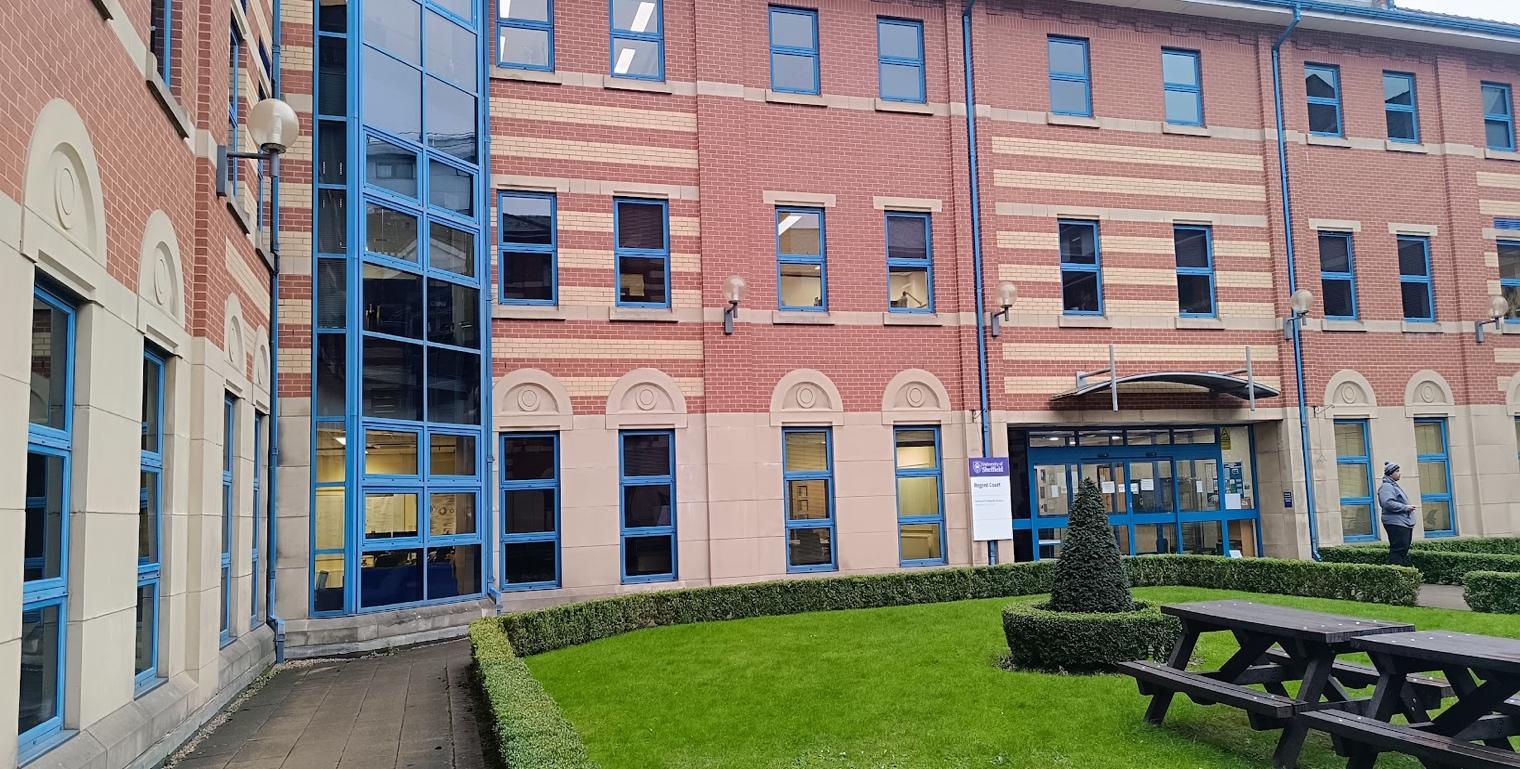
A building with a lawn and a bench

AI-generated content may be incorrect.A sign on a wall

AI-generated content may be incorrect.

School of Computer Science, University of Sheffield


Developing and Validating a Multi-Layer Analytical Pipeline

During this visit, I worked closely with the GATE/CLARIN-UK team (special thanks go to Xingyi Song and Ian Roberts) to refine the multi-step data acquisition and analysis pipeline I presented at the beginning of my stay. This placement concentrated on building and evaluating an operational pipeline for analysing agrifood discourse across social media and web sources. This work forms a foundational part of our broader effort to understand how food products acquire and project their digital identity in consumer-driven environments.A group of people standing in a room

AI-generated content may be incorrect.

Members of the GATE team


As the first analytical layer, I assessed food relatedness, distinguishing posts that genuinely concern food products from those that only mention them peripherally. This was followed by sentiment analysis (positive, negative, neutral) and a more granular classification of emotions using the food-elicited emotion lexicon developed by our team. This dual approach allowed us to capture both surface-level sentiment and more nuanced affective responses associated with agrifood products.

This visit has once again demonstrated the value of interdisciplinary cooperation in addressing complex, data-intensive challenges in food communication and consumer behaviour. I look forward to extending our partnership with the GATE group as we continue building tools and methodologies for understanding online food discourse – an emerging area at the intersection of linguistics, AI, and food science.


A screenshot of a computer

AI-generated content may be incorrect.

Screenshot of pipeline output regarding emotion


A significant part of the workflow involved classifying posts against the 17 United Nations Sustainable Development Goals, allowing us to investigate how sustainability narratives intersect with agricultural food product promotion and consumer expression. In parallel, I applied structured evaluations of health claims (healthy / unhealthy / neither), and identified mentions of nutritional content using recognised nutritional-claim terminology from the literature. Posts were also categorised by diet style, based on the most common diet-related expressions appearing in Greek online food discourse.

The pipeline further incorporated several agrifood-specific layers. These included the identification of sponsored versus non-sponsored posts; extraction of sensory attributes using the ISO sensory-analysis vocabulary; and topic classification using a controlled vocabulary derived from the LanguaL™ food-description thesaurus, an established international standard for structured food categorisation. Additional layers captured time expressions, Protected Designation of Origin/Protected Geographical Indication references, the 13 official Greek prefectures for locality insights, and standard olive oil types, given the prominence of olive-oil content in our dataset.

Together, these components form a comprehensive analytical framework that supports direct comparison between human classification, and AI-driven open-response versus closed-set classification. This comparison will allow us to quantify alignment, divergence, and the specific areas where Large Language Model (LLM)-based classification performs strongly or reveals fragility when applied to Greek agrifood discourse. This will allow us to choose the best route considering the pros and cons of each method. The placement offered the environment and technical guidance required to validate the pipeline, evaluate model behaviour, and refine the overall architecture for future tool development and collaborative research.

A screenshot of a computer

AI-generated content may be incorrect.

Pic.5: Screenshot of pipeline output regarding sensory attributes


Technical Discussions and Next Steps

Beyond the core analysis, the visit provided valuable opportunities for in-depth discussions with GATE researchers about potential tool development and methodological extensions. We reviewed infrastructure constraints, data-format interoperability issues, and strategies for orchestrating multi-step processing within the GATE ecosystem. These conversations will directly shape the next phase of collaboration, guiding both immediate refinements and the longer-term agenda for joint work.

Throughout my stay, the GATE team was extremely supportive, offering expert advice on evaluation frameworks, debugging strategies, and LLM behaviour in multi-label tasks. The environment was collaborative, constructive, and intellectually stimulating. These two weeks enabled me not only to strengthen the methodological aspects of the project but also to strategically plan our next steps, including joint publications, shared datasets, and the creation of specialised agrifood-oriented NLP tools.

I am especially grateful to the ATRIUM programme for providing this opportunity; to Diana Maynard for accepting me for a second visit and for her guidance and support; to Jo Wright for managing all logistics and securing the coziest accommodation for my stay. 


A street with lights and people walking

AI-generated content may be incorrect.

A fountain in a park

AI-generated content may be incorrect.

Christmassy Sheffield

This visit has once again demonstrated the value of interdisciplinary cooperation in addressing complex, data-intensive challenges in food communication and consumer behaviour. I look forward to extending our partnership with the GATE group as we continue building tools and methodologies for understanding online food discourse – an emerging area at the intersection of linguistics, AI, and food science.

Monday, 3 February 2025

Exploring NLP Applications in Food Research: my ATRIUM TNA visit to the GATE group

By Tenia Panagiotou

As a postdoctoral researcher at the Consumer and Sensory Lab of the Department of Food Science and Nutrition of the University of the Aegean, Greece, I study food consumption-related phenomena and consumer expression on social media. In this context, I find that Natural Language Processing (NLP) tools can significantly enhance data collection and analysis. With a background in linguistics, I explore how language can reveal insights into consumer behaviour, culture-specific and cross-cultural food-related trends, attitudes toward products and brands, and consumer expectations. To deepen my understanding of NLP tools and computational applications in social media research, I sought further training in this field.

Pic.1: Collecting posts on social media to investigate food related phenomena: sustainable meat alternatives (left), local versus imported cheeses (right).

The ATRIUM project through its TNA scheme has provided me with the invaluable opportunity to visit the School of Computer Science at the University of Sheffield and explore applications of the GATE cloud tools in my research. Although my visit was relatively short (January 20–31, 2025), it was exceptionally enlightening. I had the privilege of working closely with members of the GATE group, experts in NLP, who welcomed me into their working meetings, discussed my research challenges, and provided insightful solutions and guidance.


Pic. 2: My office away from home at the GATE headquarters (School of Computer Science, University of Sheffield). 

During my visit, I explored various GATE tools relevant to my research. Some of those tools were still under development, and the researchers were kind enough to grant me access, assist me in their application, and discuss possible extensions. One particularly useful tool was the Topic Extractor for social media hashtags, which can be used to analyze food consumption-related concepts and generate hierarchical concept graphs. The TwitIE Named Entity Recognizer proved particularly valuable in accurately identifying individual words within multiword hashtags—one of the key challenges I had been aiming to resolve. 


Pic. 3: Screenshot of the TwitIE Named Entity Recognizer that can identify words in multiword hashtags (last row).

Additionally, the Named Entity Recognizer offered significant insights by extracting predefined entities such as geopolitical locations, organizations, nationalities, and time references, enriching the analysis of consumer social media posts. I also explored sentiment analysis and opinion mining tools, while investigating how the user classification tool could be adapted for use across different platforms. Another intriguing discovery was the Multilingual Persuasion Technique Classifier, which presents exciting possibilities for analyzing professional posts on food products on social media.


Pic. 4: Identifying languages in posts, translating into English, and running Named Entity Recognition to be used for semantic network analysis. 

Beyond these tools, I also received valuable guidance on optimizing ChatGPT and Large Language Models for consistency in responses and on clustering social media post hashtags into semantically meaningful groups for further analysis. Both of these challenges were high on my research agenda, and I am grateful for the specialized insights I received. Apart from the technical expertise I gained, engaging in discussions on shared research interests, such as ontology and semantic network development, was one of the most rewarding aspects of my visit. The openness of the GATE team to exploring extensions of their existing tools and fostering future collaborations made this experience particularly enriching.

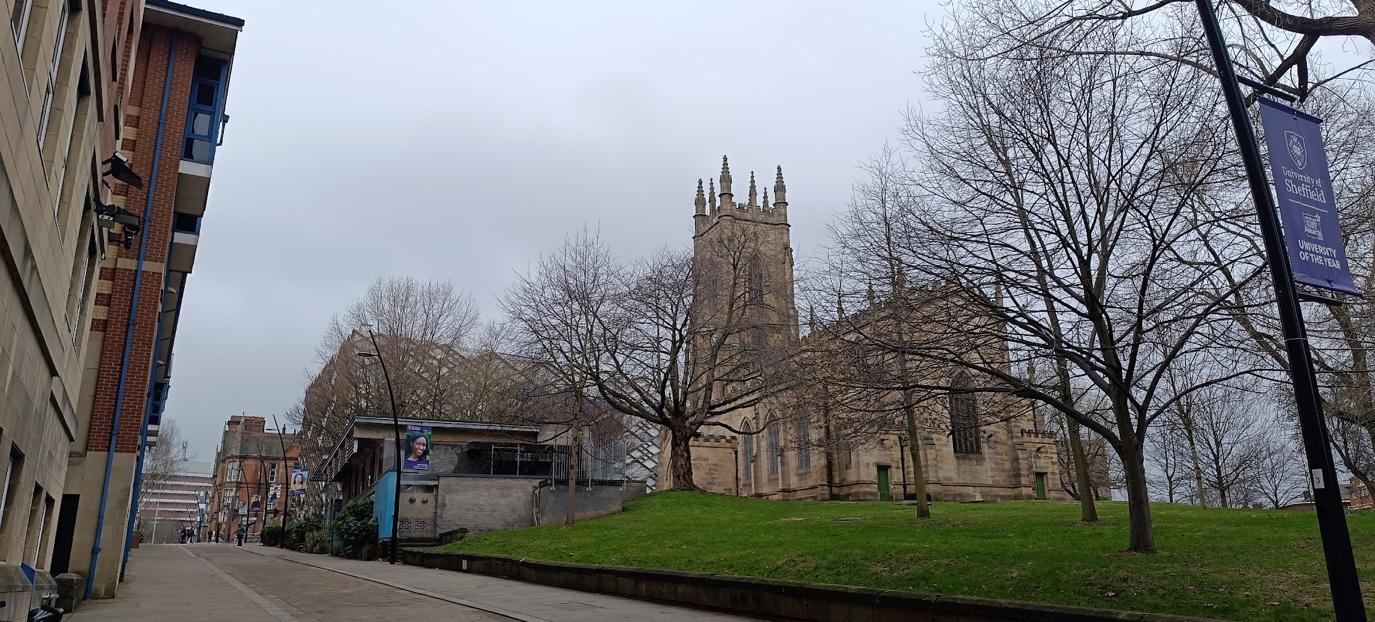
Pic. 5: St George's Church, a former parish church (now part of the University of Sheffield as a lecture theatre and student housing) has been my view from the office.

I am deeply grateful to the members of the GATE group for their time, generosity, and willingness to support me both technically and personally. A special thanks goes to Dr. Maynard, who oversaw my visit, for guiding my "investigations" and for our insightful conversations. I would also like to thank Mrs. Wright, research project assistant to the GATE group, for handling the logistical details of my trip and stay in Sheffield, as well as for helping out with the required documentation.

This visit was an invaluable experience that has significantly shaped my research perspective. I look forward to applying what I have learned and fostering further collaborations with the GATE team. I strongly believe that this will not be my last visit to the GATE infrastructure.


Monday, 6 January 2025

GATE team hosts its first ATRIUM TNA research visit: Using NLP to understand trends in political and social debate

In December 2024, we hosted research visitor Tasos Galanopoulos as part of  the ATRIUM project (Advancing fronTier Research In the arts and hUManities) TransNational Access scheme. ATRIUM's aim is to bridge 4 leading research infrastructures in: arts and humanities (DARIAH), archaeology (ARIADNE), language technology (CLARIN), and open scholarly communication in the social sciences and humanities (OPERAS). The Transnational Access (TNA) scheme offers fully funded placements for researchers across Europe. This initiative is designed to support Arts and Humanities researchers by providing access to expert knowledge, mentorship, and tools from leading Data Management organisations. Successful applicants have the opportunity to visit one of 14 different host organisations across Europe in order to conduct their research, benefiting from direct contact, knowledge sharing and network building. 


Tasos describes his visit below...

How can NLP tools and large language models be used to understand trends in political and social debate around major issues of the day? 

 What is the relationship between 'distant reading' and the layered understanding that these tools offer for large volumes of data, and 'close reading', understanding aspects of these topical issues?  

What role can these modern tools play in the humanities and in everyday journalistic practice?  

Questions such as these, on the occasion of a project on "Analysis of textual data from newspapers on the agreement of Greece's accession to the European Economic Community EEC (1961)", in the context of my postgraduate studies in Digital Humanities at the Open University of Greece, brought me to the School of Computer Science at the University of Sheffield at the end of November (23/11/2024 - 7/12/2024), to collaborate with members of the GATE team.

Despite the short period of the stay, the impressions were the best: the patience and goodwill of all the team - with Dr Maynard at the forefront - helped me to "navigate" the tools offered by the GATE Cloud and the European Language Grid, to understand a bit better the processes required, and the wider field, to learn a bit more about its "alphabet" and requirements. At the same time, through the regular meetings of the team I was able to get a "glimpse" of the modern, specialised, and valuable research being carried out at the university.  


In relation to the actual subject of the research, the findings from the processing with tools such as NamedEntity Recognition, N-gram detection and their visualization with wordclouds, Topic Classification, Sentiment Analysis, Multidimensional analysis with LIWC-22, Persuasion techniques were very interesting, giving answers and insights to our questions that had to do with the attempt to develop a methodology to identify, document and frame named entities in the context of the investigation of public discourse, Press with different political orientation and political rhetoric in relation to critical events in political life, with reference to the economic and social environment inside and outside the country. Also "identifying" and categorising arguments for and against, and 'bias' for/against in the Press of that time and at a subsequent level , enabled us to explore ways to link entities to key concepts in argumentation.


 Overall, my impressions were therefore the best from this constructive visit, a visit that on a personal level gave me inspiration and opened new horizons, but also created new contacts with remarkable people.


Tuesday, 20 October 2020

From Entity Recognition to Ethical Recognition: a museum terminology journey


This guest blog post from Jonathan Whitson Cloud tells the story of "how a relatively simple entity recognition project at the Horniman Museum has, thanks to the range and flexibility of tools available in GATE, opened the door to a method for the democratisation and decolonisation of terminology in Museums."
In 2018 the Horniman Museum opened a new long term display called the World Gallery. As is usual with museum displays, there was only a very limited amount of space for text giving context to the over 3,000 items in the cases. As is also now usual, the Horniman looked to its website to share more of the research and stories the curators had unearthed in the 6 year gestation of the gallery. 

The Horniman World Gallery

Entity Recognition

Central to the ambition for the web content was a desire to bridge the gap between the database that the museum uses to record its collections and the narrative and research texts recorded in a wiki. The link would be the database terminologies and authority lists, used as business controls in the database. The construction of these terminologies has a revered place in museum practice. Museums as they are today emerged from the enlightenment project to categorise and bring order to the world. More on the consequences of this later, but for now it was useful to have a series of reference terms for the types of objects in the gallery, the cultures they came from, the people, places and materials etc. 

I had learnt about GATE and participated in the week's training course in 2015, when I first became interested and aware of the potential for Natural Language Processing as a way of managing and getting the most out of the vast and often messy data holdings in museums. 

My hope was that the terminologies and authorities in our collections database could serve as gazetteers for gazetteer-based entity recognition in GATE. The terminology entities from the database-generated gazetteers would be matched in the wiki texts and rendered as hyperlinks to reference pages for the entities on our website.

This worked pretty well, and we released over 500 wiki pages of marked up text, with new pages continuing to come on line. The gazetteer matching, though, was only accurate enough to be suggestive, with many strings appearing in multiple gazetteers (people’s names were particularly difficult). I had been wanting an excuse to explore the machine learning potential in GATE and this seemed like an opportunity, so I came up to Sheffield for an additional day’s training (thank you Xingyi) in early March 2020, and came away with a pipeline that used Machine Learning to identify term types independently of the gazetteers, which could then be built into a set of rules that improved the gazetteer identification significantly. The annotations produced were still checked prior to publication, but with considerably fewer adjustments required.

The Gazetteer Pipeline developed in GATE

The next experiment was to run the machine learning enhanced gazetteer pipeline over a set of gallery texts for an older exhibition. This produced a lot of matches/links, and should we publish these texts online, they will appear with in-line links to terms already in use in our Mimsy and the World Gallery Wiki texts, so becoming an integrated part of the web of linked terms and texts.

The Machine Learning pipeline built in GATE


Another very welcome outcome of this process was that the pipeline identified a number of terms that were not in our gazetteers and which became suggested new terms for our terminologies, demonstrating GATE’s ability to create as well as identify terminology, and it is this function that we are now looking to exploit in a new project.

Decolonisation of Museum Collections

In 2019 the Horniman was appointed by the Department of Culture Media and Sport (DCMS) to lead a group of museums in developing new collecting and interpretation practice addressing the historic and ongoing cultural impact of the UK as a colonising power.  The terminology that museums use about their collections is very much a subject of interest to museums seeking to decolonise their collections. As mentioned before, the creation and application of categories has been fundamental to museum practice since museums emerged as knowledge organisations in the 18th century. It has now become painfully clear, however, that these categories have been created and applied with the same scant regard for the rights and culture of the people who made and used the items to which they have been applied as the ‘collecting’ of them. That is to say, at best rudely and at worst violently. 

We are currently building a mechanism, again based on a wiki and GATE, whereby new and existing texts authored by the communities who made and used the items in the museum collection can also be marked up by those communities to make learning corpora. A machine learning pipeline will then build new terminologies to be applied to the items that the communities made and used. This is not only decolonising but democratising as it gives value to texts by any members of a community, not just cultural academics or other specialists, in many media including social media.

The GATE tool with its modular architecture has enabled me to take an experimental and incremental approach to accessing advanced NLP tools, despite not being an NLP or even a computer expert. That it is open source and supported by an active user community makes it ideal for the Cultural Heritage sector which otherwise lacks the funding, the confidence and the expertise to access the powerful NLP techniques and all they offer for the redirecting of museum interpretation away from expert exposition towards a truly democratic and decolonised future.